
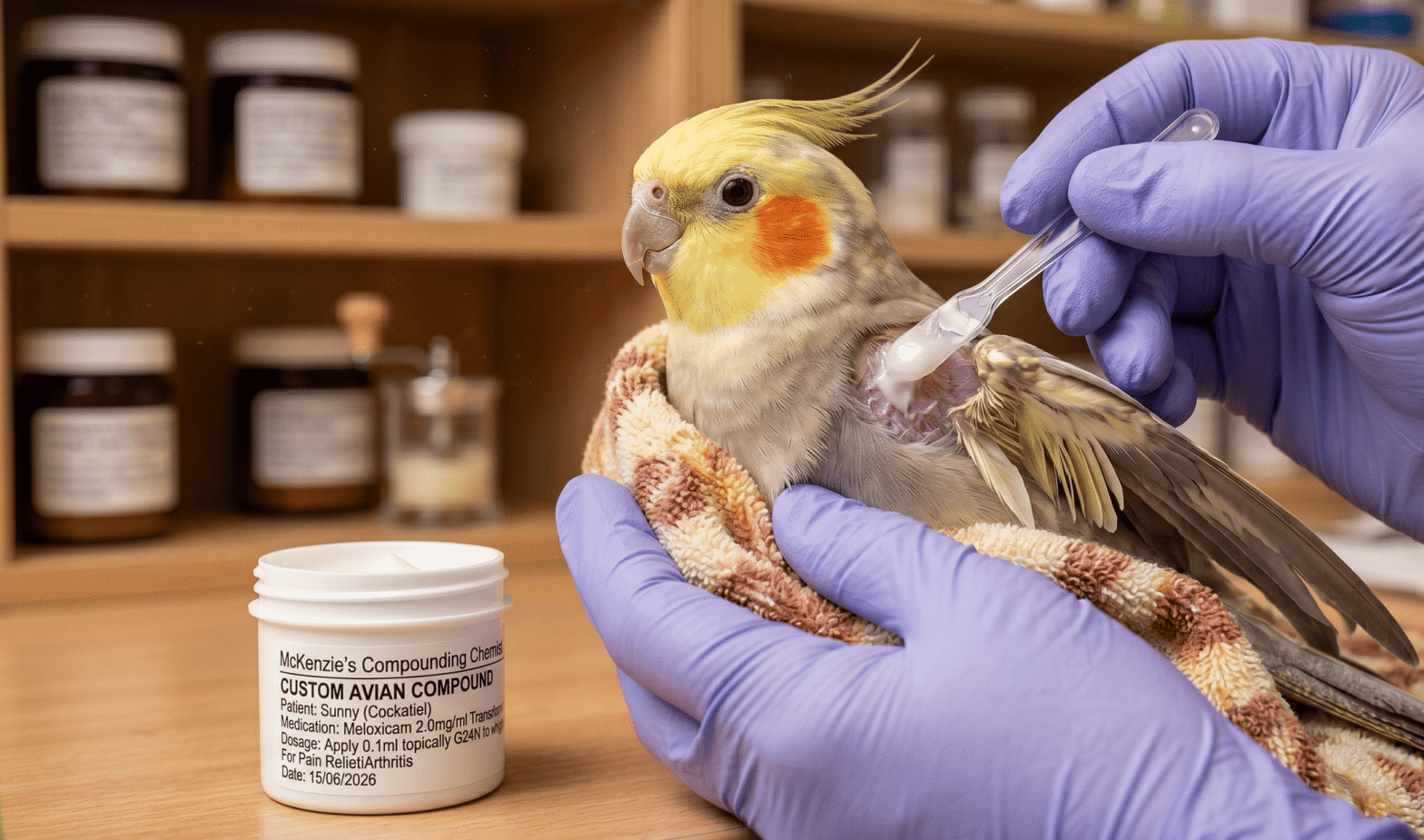
Compounded medications for birds provide custom dosages, palatable flavours, and specialised delivery methods so that medicines can be given safely to unique avian species.
Rather than relying on standard tablets made for larger animals, a compounding pharmacy can prepare a treatment that suits a bird’s tiny body and fast metabolism, on a prescription from your vet.
Birds are not small dogs or cats. Their size, physiology, and strong sense of taste all change what a workable medicine looks like, which is exactly where compounding helps.
Common Avian Conditions Treated With Compounded Medications
An avian vet diagnoses the condition and decides on the right treatment. Where a compounded preparation is appropriate, it is tailored to individual avian patients and their situation.
Some of the most common presentations include the following:
Respiratory and Systemic Infections
Respiratory infections are common in birds, often triggered by environmental stress or by organisms such as Chlamydia psittaci (the cause of psittacosis, also called parrot fever) and Mycoplasma.
The right treatment depends on the type of microbial infection involved and, for bacterial cases, the specific bacterial organism a vet identifies.
A vet may prescribe antibiotic agents such as doxycycline or enrofloxacin, sometimes alongside an antifungal to reduce the chance of a secondary yeast problem.
The antimicrobial agents commonly used in birds also extend to other problems a vet may diagnose, such as anaerobic soft tissue infections, urinary tract infections, and, in serious cases, central nervous system infections.
Some anaerobic infections call for medicines chosen specifically for where they act in the body.
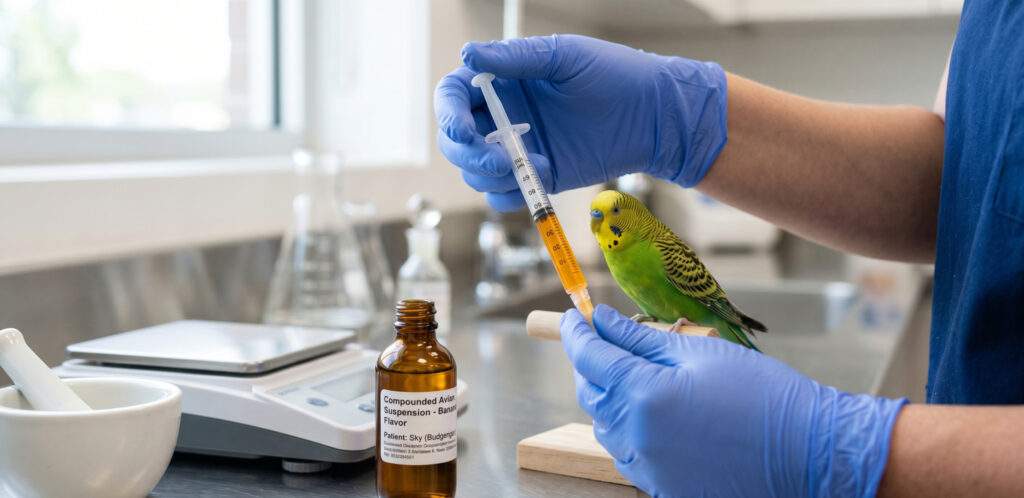
Compounding allows the precise weight-based dose a small bird needs, delivered as an oral medication in a flavoured suspension that masks the bitter taste.
Gastrointestinal and Crop Issues
Problems affecting the gastrointestinal tract, such as avian gastric yeast or candidiasis, are another frequent reason birds are seen by a vet.
Antifungal medicines like nystatin, fluconazole or itraconazole may be prescribed. Some of these work best with prolonged contact against the crop lining, so a compounding pharmacist can prepare a thickened oral gel that clings to the surface for longer rather than washing straight through.
Egg-Binding and Reproductive Issues
Reproductive tract disorders, including egg-binding and egg-related peritonitis, can be serious and need prompt veterinary attention.
Depending on the case, a vet may direct treatments such as calcium salts to support muscle function, along with anti-inflammatory care. Because the doses involved can be tiny, compounding is useful for producing highly concentrated, accurate liquid or transdermal preparations suited to a delicate patient.
Pain and Inflammation
Arthritis, trauma, and recovery after surgery can all leave a bird in pain, and managing that pain is an important part of care.
Anti-inflammatory or pain-relief medicines such as meloxicam may be prescribed. Compounding these into oral liquids or transdermal skin creams, applied as a topical treatment, allows easy, stress-free dosing, without forcing an unwell bird to take an unpleasant-tasting pill.
Other Conditions
Vets also manage issues such as nutritional deficiencies (Vitamin A and calcium are common), metabolic bone disease, which can lead to fractures and poor egg production, and lead toxicity, where chelation may be used. Behavioural conditions like feather plucking, which can stem from stress, are sometimes part of the picture too.
In each case, custom strengths and forms can make a prescribed treatment far more practical to give at home, and combination therapies can be brought together into a single, easier-to-administer preparation where a vet considers it appropriate.
Why Birds Need Different Medications
Treating birds is one of the more demanding areas of veterinary medicine, and avian medicine calls for a different approach to dosing than dogs or cats. Birds have very high metabolic rates and very small body weights, so the dose that helps one species could be far too much, or too little, for another.
Accurate, weight-based dosing is essential, and the margins are small.
Many standard medications are simply unsuitable for birds because of their size and formulation. A tablet designed for a dog cannot be split finely enough for a budgie, and forcing a stressed bird to swallow a pill can do more harm than good.
Taste is the other hurdle. Birds have a strong sense of taste, especially for fruit, and they often reject medicines that are bitter or unfamiliar. A treatment the bird spits out is not a treatment at all.
Species variation adds another layer. A formulation that suits a large macaw may be wrong for a cockatiel, a finch, or a lovebird, and a vet has to account for those differences when deciding on a dose and a dosage form. There is rarely a single off-the-shelf product that fits every bird in front of them.
Compounding solves these problems at once by letting a pharmacist tailor the strength, the form, and the flavour of a prescribed medicine to the individual patient.
How Compounding Solves the Problem
Compounding adapts a prescribed medicine to the bird in three main ways:
- Custom dosages: precise, weight-based strengths, right down to the very small amounts delicate species need.
- Palatable flavours: options such as banana, tutti-frutti, cherry, grape and piña colada, chosen to improve acceptance in birds that are fussy about taste.
- Specialised delivery: flavoured oral suspensions, thickened gels, tiny capsules, and transdermal preparations that make dosing less stressful for both bird and owner.
To achieve this, compounding pharmacists draw on suspension vehicles and carriers developed specifically for sensitive and exotic patients, rather than the sweetened syrups made for cats and dogs.
The base is chosen to hold the medicine stable, deliver it to the intended site, and carry a flavour the bird is likely to accept.
The practical payoff is better compliance. When a medicine is the right strength and the bird will actually take it, the prescribed course is far easier to complete, which matters most for the longer-term treatments some chronic conditions require.
The Role of Your Avian Vet and the Pharmacy
Good avian care always starts with a diagnosis. All compounded avian medications must be prescribed by a vet, ideally one experienced with birds, who understands how different species respond and what doses are safe.
Once a treatment has been prescribed, this is where a compounding pharmacy comes in. The pharmacist prepares the exact formulation, strength and flavour the vet has specified, using bases and vehicles designed for sensitive patients rather than off-the-shelf products built for other animals.
McKenzie’s Compounding Chemist is an experienced Perth pharmacy that works alongside vets to prepare customised animal medicines.
Our veterinary compounding service includes dedicated avian compounding, and the same tailored approach extends to other exotic patients, as you can read in our piece on how reptile compounding works.
Helping Your Bird Get Better! Visit McKenzie’s Chemist Today!
Birds need medicine that fits their size, their metabolism, and their tastes, and that is exactly what compounding makes possible. With a vet’s prescription, a tailored preparation turns a difficult dosing problem into something you can manage calmly at home.
If your avian vet has prescribed a compounded medicine, the McKenzie’s team is happy to prepare it and answer any questions about how it is made.
You can get in touch here or order your prescription online.
This article is general information only and is not veterinary advice. Always consult a qualified avian veterinarian about your bird’s health and any medication.