
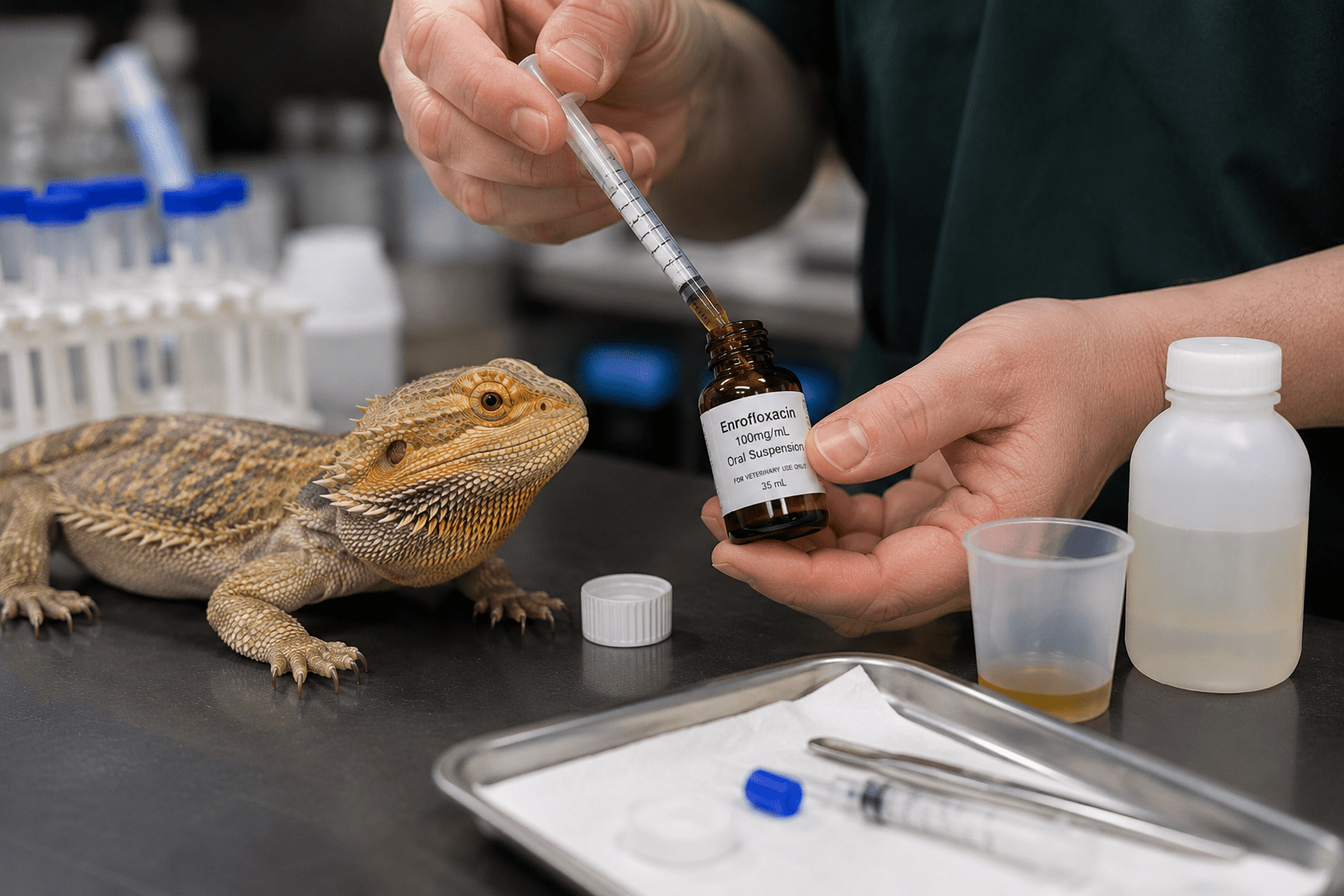
Reptile compounding is the specialised pharmaceutical practice of customising medications to meet the unique health needs of reptiles and other exotic pets.
Reptiles vary enormously in size, metabolism, and species-specific physiology. Standard commercial medications are often unsuitable for them, or simply do not exist.
A compounding pharmacist works with your veterinarian to create tailored medications to your reptile’s exact species, body weight, and health condition.
How Herpetology Compounding Works
The process follows four clear stages, beginning with your veterinarian and ending with a medication prepared precisely for your reptile’s needs.
Step 1: Veterinary Diagnosis and Prescription
The process begins with your veterinarian.
The vet diagnoses the reptile’s condition and determines that a standard commercially available medication is not suitable. This might be because the dosage is wrong for the species, the dosage form cannot be safely administered, or no appropriate product exists.
The vet then issues a valid prescription specifying the drug required, the strength, and the preferred delivery form.
McKenzies’ compounding pharmacists collaborate with the vet from this point to determine the most appropriate formulation for that specific animal.
Step 2: Customisation of the Medication
Once the prescription is received, the compounding pharmacist customises the medication in several ways.
Precise dosage strength. The medication is compounded to an exact concentration based on the reptile’s body weight, ensuring accurate dosing for small, large, and exotic patients alike.
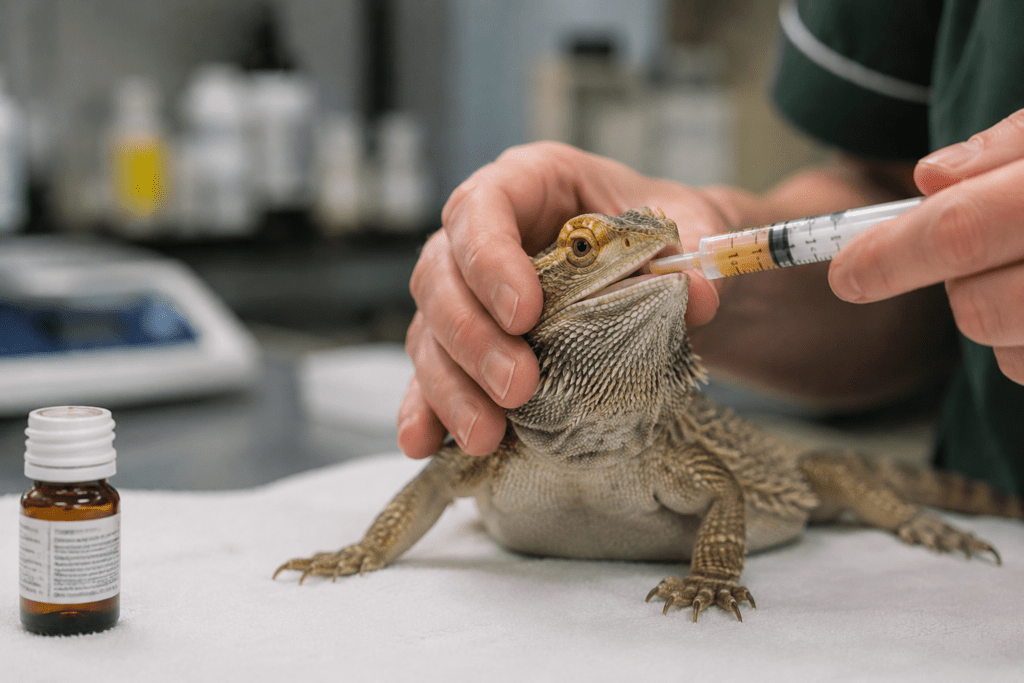
Alternative delivery forms. Instead of pills or standard tablets, the medication can be prepared as an oral liquid suspension, transdermal gel, capsule, or powder, whichever form is most appropriate for the species and easiest for the owner to administer.
Flavouring. Medications can be flavoured to improve compliance and make administration less stressful for both the reptile and the owner.
Removal of allergens and fillers. Mammal-specific excipients such as lactose can be removed where clinically appropriate, ensuring the formulation is safe for reptile patients.
Step 3: Specialised Formulations
Different clinical situations call for different formulation types.
Oral suspensions are stable liquid medications that allow precise dosing and are widely used for small animal patients. Transdermal gels are absorbed through the skin, reducing the need for handling and minimising stress during medication time. Injectable formulations can also be prepared where clinically required and prescribed by the vet.
Commonly compounded medications used in reptile compounding include antimicrobials such as enrofloxacin for bacterial infections, anti-inflammatory drugs, and cardiac medications.
Step 4: Preparation and Quality Control
Compounding pharmacists use precise measurements and controlled preparation processes to ensure each medication is accurate, stable, and appropriate for the required treatment period.
At McKenzies, all raw materials are sourced from reputable pharmaceutical manufacturers and undergo stringent batch testing before use.
Every compounded medication is prepared strictly on receipt of a valid veterinary compounding prescription.
The Benefits of Reptile Compounding
- Improves medication compliance: the right form and flavour make administration easier for the owner and more tolerable for the animal.
- Fills the gap: provides access to medications that do not exist in commercial form for many exotic animals.
- Precise dosing: concentration matched exactly to the reptile’s body weight, not estimated from a human or mammal dose.
- Reduces stress: appropriate delivery forms, such as transdermal gels, minimise handling and medication time.
- Species-appropriate formulations: unsuitable fillers and allergens are removed, making the medication safe for reptile patients.
Why Standard Medications Don’t Work for Reptiles
Most commercially available pet medications are formulated for mammals (dogs, cats, horses) and are built around mammalian physiology and metabolism.
Reptiles metabolise drugs very differently. They also vary dramatically in size across species, meaning a standard dose appropriate for one animal can be completely wrong for another. A bearded dragon and a python may both be reptiles, but their therapeutic requirements are nothing alike.
Beyond dosing, many reptiles physically cannot swallow standard tablets or pills. And some commercial formulations contain fillers such as lactose that are unsuitable for reptile physiology.
For a significant number of exotic species, no commercially available medication exists at all. Compounding fills that gap.
Which Reptiles and Exotic Pets Benefit from Compounding?
Reptile compounding supports a wide range of species, including snakes, bearded dragons, lizards, geckos, turtles, and tortoises.
Conditions commonly addressed through compounding include metabolic bone disease, bacterial and fungal infections, respiratory disease, shell infections, and post-surgical recovery.
Beyond reptiles, compounding also benefits other animals where standard medications are unavailable or unsuitable.
This includes birds, rabbits, guinea pigs, ferrets, and sugar gliders. McKenzies also provides avian compounding for bird owners requiring the same tailored approach.
Learn How Compounding Pharmacies Offer Reptile Medication at McKenzie’s Today!
Every reptile has a unique set of needs, and compounding ensures their medication meets those needs precisely rather than forcing a mammal-focused product to fit where it simply wasn’t designed to.
Learn more about our herpetology compounding services or get in touch with our team to discuss your reptile’s prescription today.