
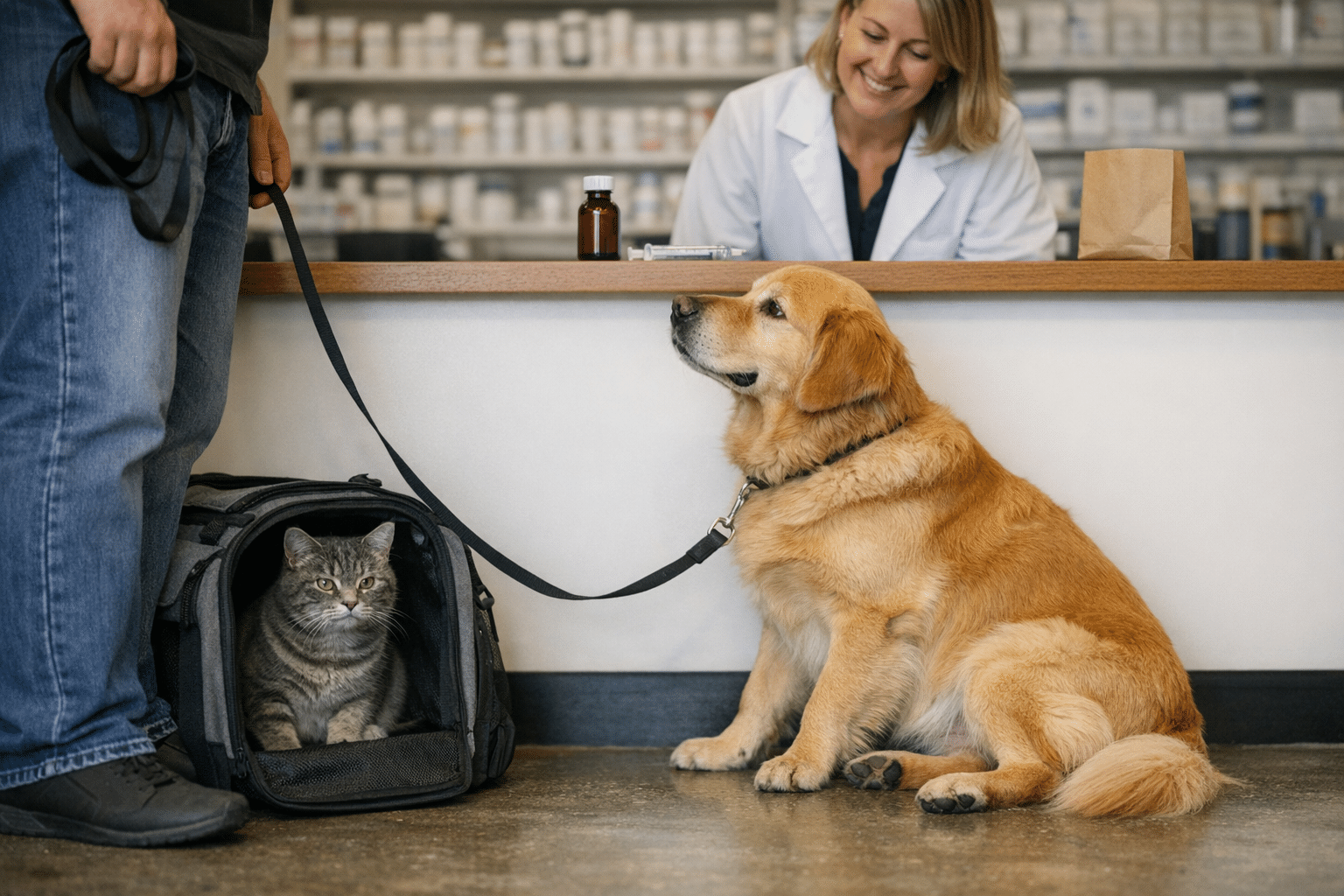
Some pets need custom-made medications because standard, mass-produced drugs don’t match their size, species, or medical needs. When that happens, a veterinarian can prescribe a compounded version made specifically for that animal.
Commercial tablets may not come in the exact dose your pet needs, or your pet may refuse to swallow a hard pill. A custom version can also add a flavour they enjoy, leave out fillers they react to, or replace a discontinued medicine.
Every custom-made medication starts with your vet’s prescription.
This article is general information only and is not veterinary advice. Always speak with your vet about your pet’s health and medication.
Why Standard Medicine Doesn’t Suit Every Pet
Customisation matters when the standard options in veterinary medicine don’t meet an animal’s needs.
Their Body Needs a Different Dose
Commercial pills are often scaled for humans or average-sized animals. A small cat or bird may need a tiny micro-dose, while a large dog may need far more than one tablet provides.
Different species also process drugs differently, so the right dose depends on the whole body. Precise dosing matters most in delicate conditions such as heart disease or thyroid disorders, where too much risks toxicity and too little leaves the condition under-treated.
They Won’t Swallow It
Pets often refuse bitter or oversized pills, and refused pills mean missed doses. A compounding pharmacy can turn a tablet into a flavoured liquid, a chewable treat, or a transdermal gel rubbed onto the skin.
A taste your pet accepts makes them far more likely to finish their treatment.
They React to an Ingredient
Commercial products can contain fillers, dyes, sugar, or preservatives that cause reactions in sensitive animals. A custom medicine can be made from scratch without them.
The Medicine Isn’t Available
Some species and conditions have no suitable approved product. When a commercial medicine is discontinued or out of stock, compounding can recreate it so your pet keeps access to treatment without interruption.
Tips for Giving Your Pet Medicine at Home
Many pets can be dosed with patience and a few tips and tricks.
Hide it in food: Wrap the pill in a bit of cheese, cream cheese, or a small meatball. Strong-smelling food helps mask the smell and taste. Offer a plain piece first so your pup isn’t suspicious, then sneak in the real one.
Try a pill popper: It places the tablet at the back of the mouth, away from your fingers and their teeth.
Use the head-tilt method: Stand behind your dog, gently tilt their head up, and pop the pill onto the centre of the tongue at the back. Hold the mouth closed with one hand and stroke the throat to help them swallow.
Wrap your cat in a towel: Swaddling keeps paws contained and helps prevent scratching.
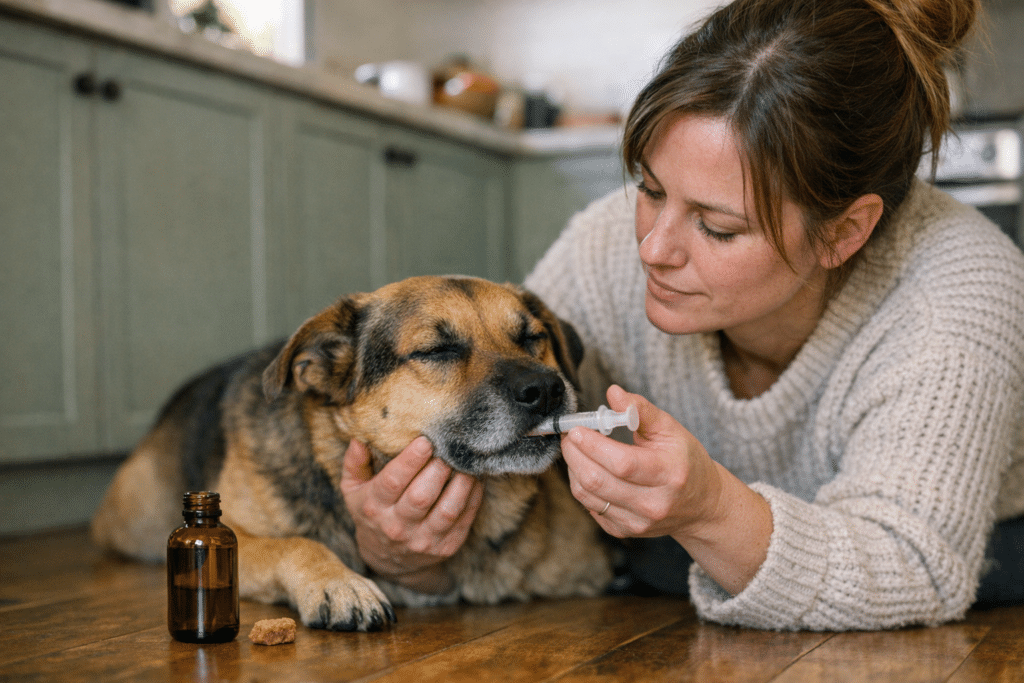
Use a syringe or dropper for liquids: Try inserting it at the side of the mouth and giving the liquid slowly.
Always reward: A treat and some praise make giving the next dose easier.
If you’re unsure, ask your vet or practice staff to show you how.
When Tricks Stop Working
Some pets simply won’t comply, however carefully the medicine is hidden. Missed doses mean the treatment can’t do its job.
That’s the time to ask your vet about a custom option. Medicine in pill form isn’t the only way.
Depending on your pet, a compounding pharmacy can prepare it as a flavoured liquid in chicken, fish or beef, a medicated chew, a transdermal gel, or a capsule sized for a small mouth.
The process starts with your vet’s prescription, and only the way the medicine is given changes.
Why Human Medicine Is Never a Safe Shortcut
It can be tempting to open the family medicine cabinet when your pet seems unwell. Human medicines are dosed for people, and some are toxic to cats and dogs even in small amounts. It’s a risk best avoided.
Always get guidance from your vet first, and only purchase pet medication from a regulated pharmacy on prescription to ensure it’s safe for your animal.
You can read more in our guide to compounding for your pet.
Need a Custom Medication for Your Pet? Contact McKenzies Compounding Chemist Today!
When standard medicine doesn’t fit your pet, a custom-made version on your vet’s prescription can make treatment work.
At McKenzies Compounding Chemist, our pharmacists work alongside vets to prepare medications for dogs, cats, birds and reptiles in a dedicated compounding laboratory. We post Australia-wide, so you can find the right option wherever you are.
Get in touch with our team or order your prescription online.
This article is general information only and is not veterinary advice. Always consult a qualified veterinarian about your pet’s health and any medication.